Hextraction Online
Guidelines and tools facilitating online play of Hextraction, the open-source marble-rolling board game by Zack Freedman.
Random Tile Generator
UNDER CONSTRUCTION!
Check back in the future for tools that make it easier to play Hextraction online.If you want to help make this happen, you can support me finacially by buying Hextraction tiles here, or checking out my electronic music here. Otherwise, stay tuned for updates!
Online Gameplay Guide
The following steps will allow the open-source marble-rolling board game Hextraction to be played over the internet via Zoom, Twitch livestream, or similar methods. I designed this guide to be a means by which to host 1v1 Hextraction tournament brackets, but the guidelines can be modified to allow the game’s “host” to also participate as a player. Positional dictation can also be adapted to work with a grid-based board of any size and shape.NOTE: Read up on the basic rules of Hextraction here first!
PREPARATION

* ESTABLISHING A TILE POOL:Before hosting, the host must write or have available a list of all tiles and their quantities, sorted into Basic Tiles and Special Tiles.
(See an example list here.)
TO DO: ADD LIST ^Before the match, each player is offered this list of tiles, and must choose 10 Basic and 5 Special tiles from the list. They then private-message the host with their selections. (If players' combined selected quantity of a specific tile totals more than the quantity on-hand, substitute a random tile of the same type (Basic/Special).Once all tiles are selected, they are combined into a Tile Pool, along with 5 random Basic Tiles and 5 random Special Tiles per player.
* BEGINNING A MATCH:The host begins the match by drawing three tiles for each player and placing them in their respective dedicated locations. (At this time, there is no easy way to keep the tiles secret, so this rule is ignored.)For 2-player matches, flip a coin to start – heads, begin with alphabetically-first username; tails, begin with alphabetically-last username.
PLAYING A TURN:
During a turn, a player may decide to roll a ball down any ramp first, then play a tile – OR they may play a tile, then roll a ball down any ramp.

IF PLAYER HAS NO MIC, DICTATE TURNS AS FOLLOWS:
A1. Choose whether to roll from an entry ramp first – see "D. Roll from entry ramp" below.A2. Select tile to play: "[1-3]" (left to right, as seen in player’s hand.)B. Select board position to play it in: “[A-E][1-5]” (navigated like a chess board; see diagram in the Tile Glossary.)C. Choose tile's orientation: "[0-3][C/CC]"
• 0 = "no rotation"
• 1[C] / 1[CC] = "rotate clockwise / counter-clockwise one notch"
• 2[C] / 2[CC] = "rotate clockwise / counter-clockwise two notches"
• 3 = "rotate 180°"
To identify which way is “right-side-up,” use the Tile Glossary.)
"AC" (anti-clockwise) may be substituted for CC if preferred.D. Roll from entry ramp: "roll [1-6]" (from left to right; this action can occur before or after playing a tile.)NOTE!! – if tile has an “on play” effect, the player may append “activate,” “open,” or any other relevant term if they choose to use said effect. (For instance, when playing the Tile Built For Two, player may choose to “open” the tile.) Must be done IMMEDIATELY after placement / orientation.
EXAMPLES:
“Play tile 2 in position B3 and orient it 120° clockwise, then roll from entry ramp 1" would be written as "2, B3, 2C, roll 1.”“Roll 6, 1, D2, 0, activate" would mean "roll from entry ramp 6, then play tile 1 in position D2 with default orientation and activate its effect."
* IF A PLAYER DRAWS A SECRET TILE:The host peeks beneath the tile's lid and sends the player a private message with the type of tile they drew. (Refer to the Secret Tile Guide in the Tile Glossary for orientation information.)
* REGARDING PLAYER VOTES IN A 2-PLAYER GAME:When voting to modify gameplay or make any exceptions to existing rules (such as destroying a tile), both players must agree in order for the proposition to be enacted. This is an amendment to Section 0.5 of the official Hextraction rules intended to prevent phenomena such as "pool-cycling" – performed by repeatedly playing a tile, calling a vote to destroy it, automatically winning the vote, then drawing and playing a new tile.
* ADDITIONAL DETAILS:When a player places a tile, the host will randomly draw a new tile to replace it in the player’s hand. (*OPTIONAL: host may use a random number generator to determine next tile.)Players may request an explanation of any tile at any time. This includes (but is not limited to) rule cards, visual examples, and orientation options.
All other Hextraction rules are followed as normal.See the abridged ruleset here.If necessary, refer to the full rules here.
HOST: Currently, the easiest way to provide the tiles to players is to draw them like a poker dealer, as randomly as you can manage, then type up a tile list for each player and private-message it to them.In the future, I hope to offer an online tool that allows hosts to specify their tile pool, gives players a fair chance to get any of the available tiles, and dispense a list privately. Maybe a graphical interface for use during gameplay, too.But for now, bear with me as I continue to improve this system. I want to make Hextraction as accessible as possible to everyone who wants to play.To support my efforts to improve the Hextraction Online experience, you can purchase Hextraction tiles from me here, or check out some of my electronic music here.
Tile Glossary
View all available tiles, and learn their properties and effects.Forbidden Tiles and proper attribution coming soon!
IMAGE NOTES:
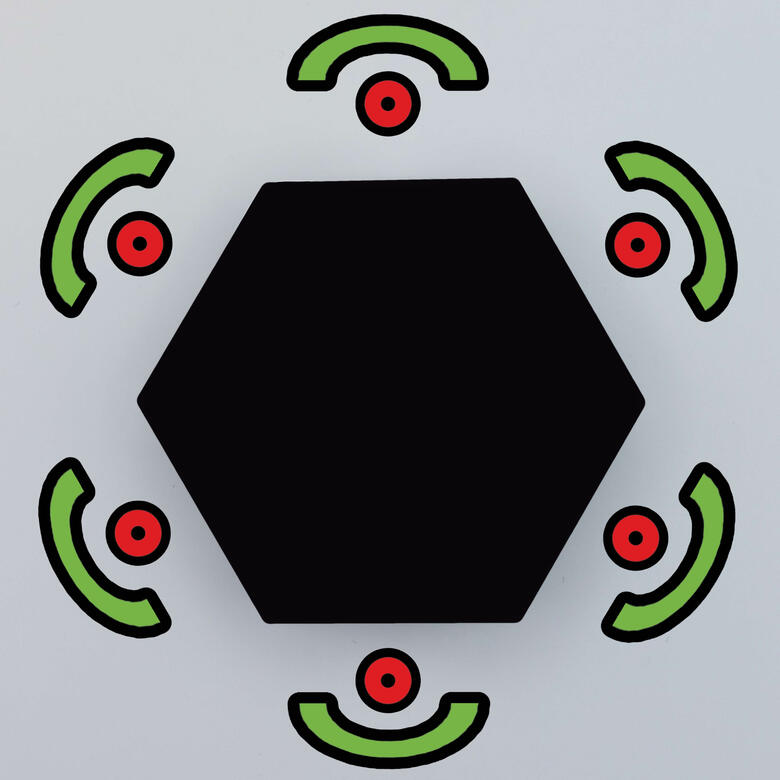
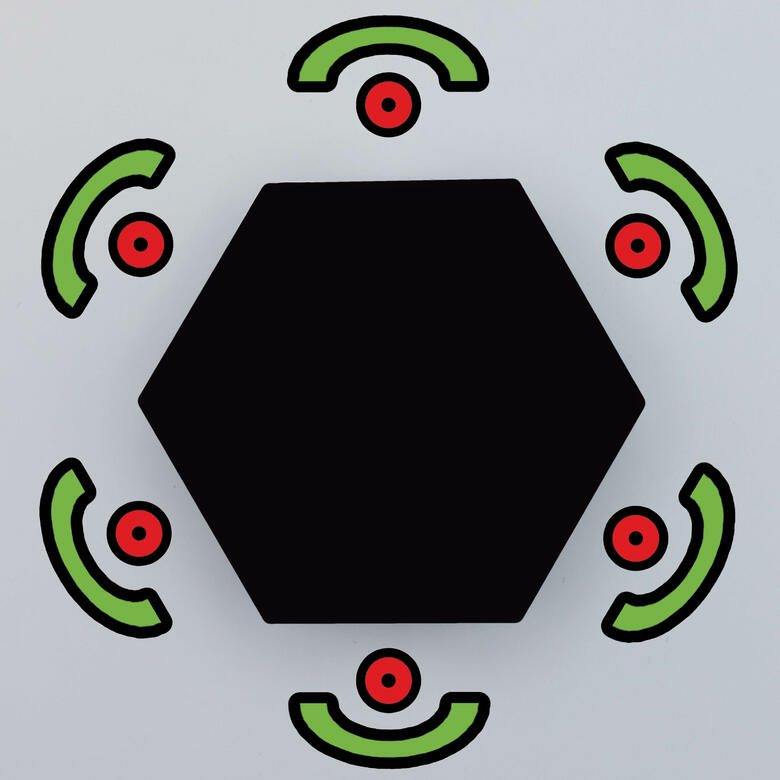
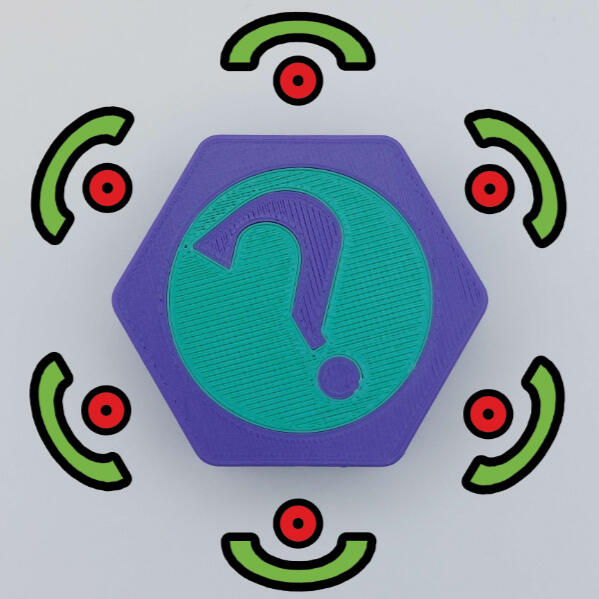
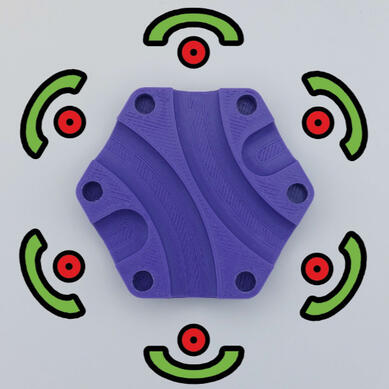
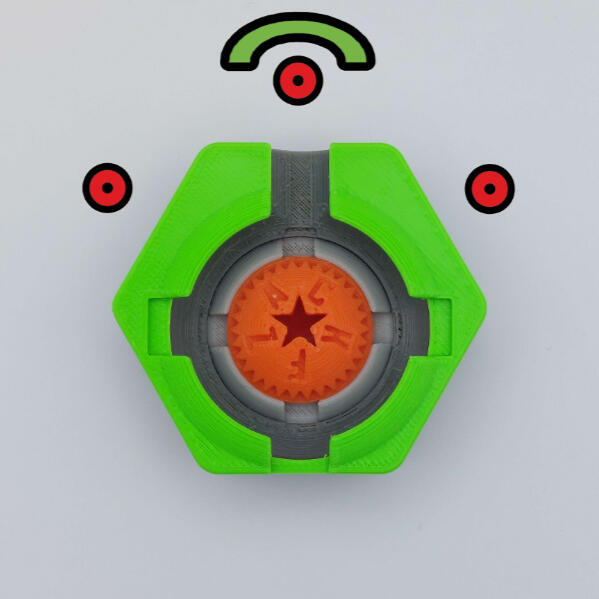
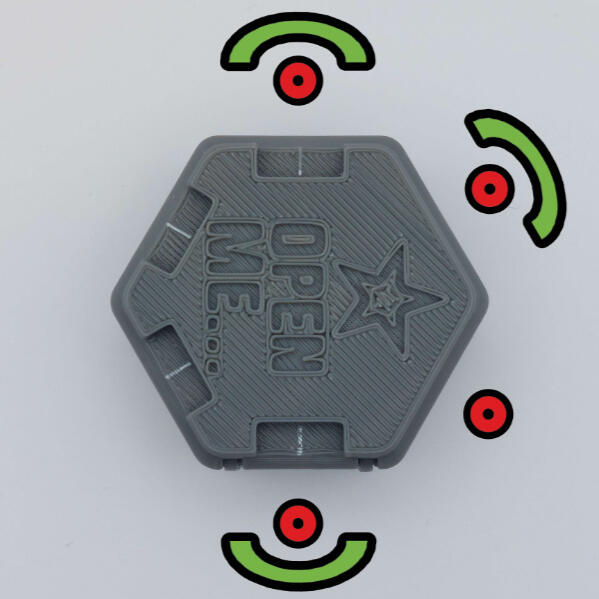
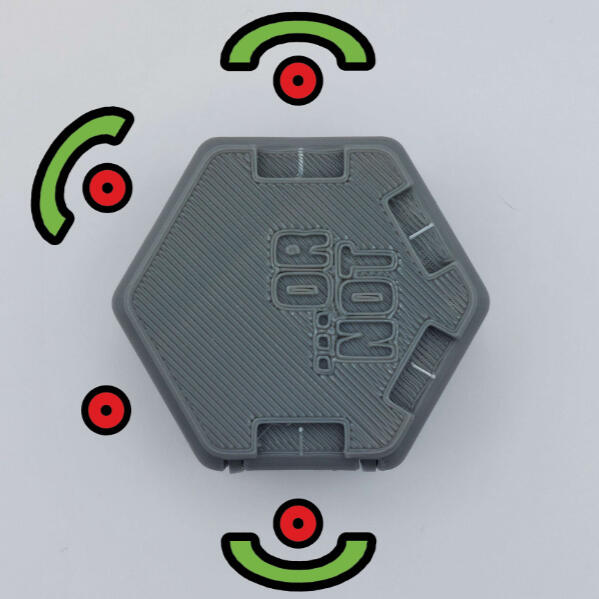
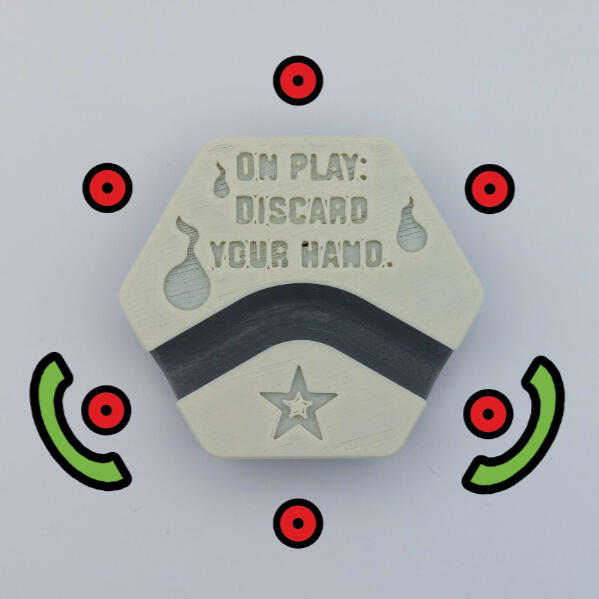
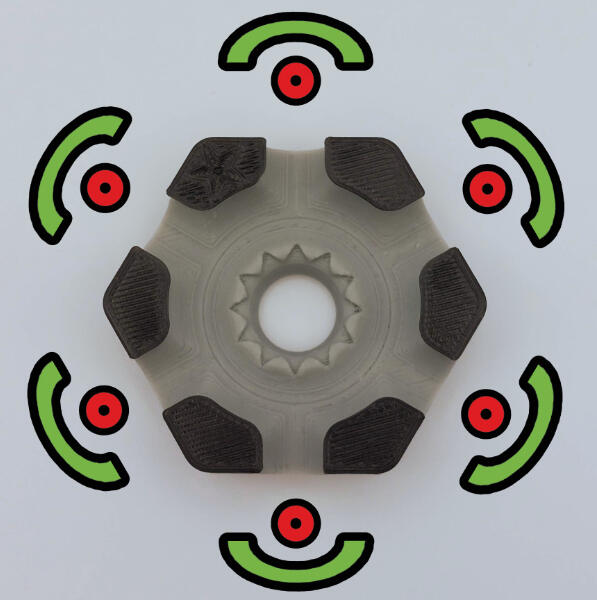
Green Semicircles indicate the location of entrances/exits.Red Dots indicate which faces can legally be positioned North.
BASIC TILES
Basic tiles are tiles with NONE of the following:
– moving parts;
– special rules;
– On-Play / Trigger effects.
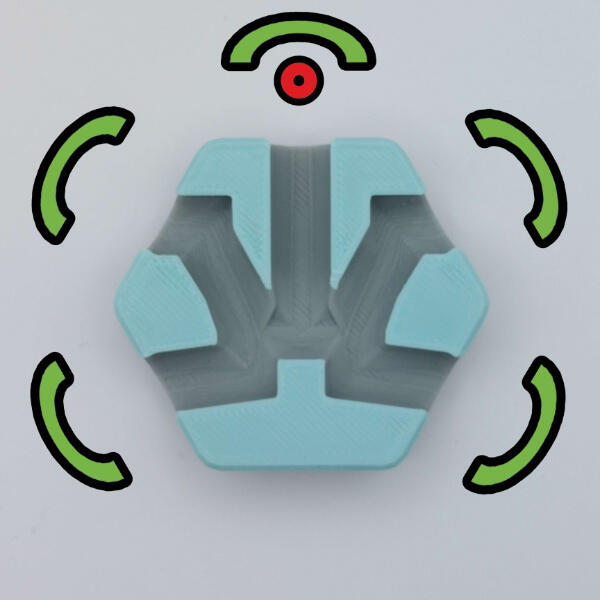
Asterisk
A straight-lane tile that permits passage in all directions.Orientations: Any
Crab
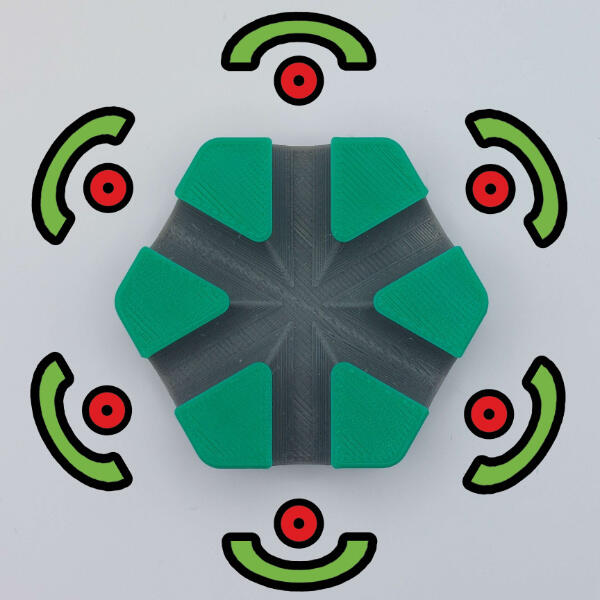
A Newton's Cradle-type tile. Might capture a ball in the center lane, which will be knocked loose by a ball traveling through either side lane.Orientations: 0
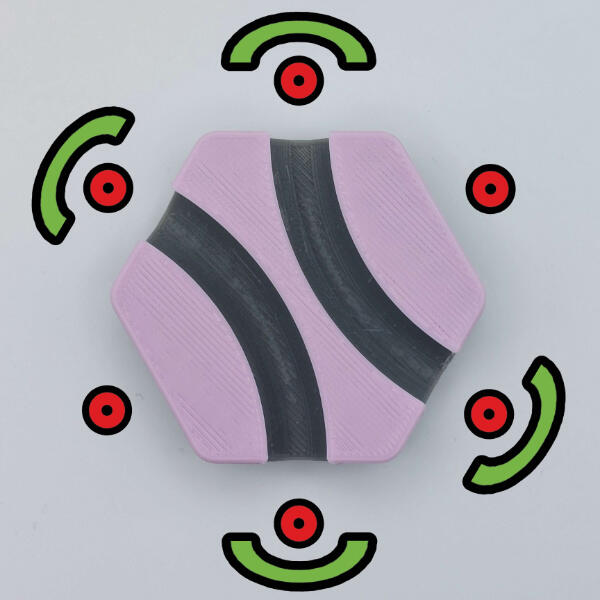
DC
A simple tile with two gentle turns.Orientations: Any
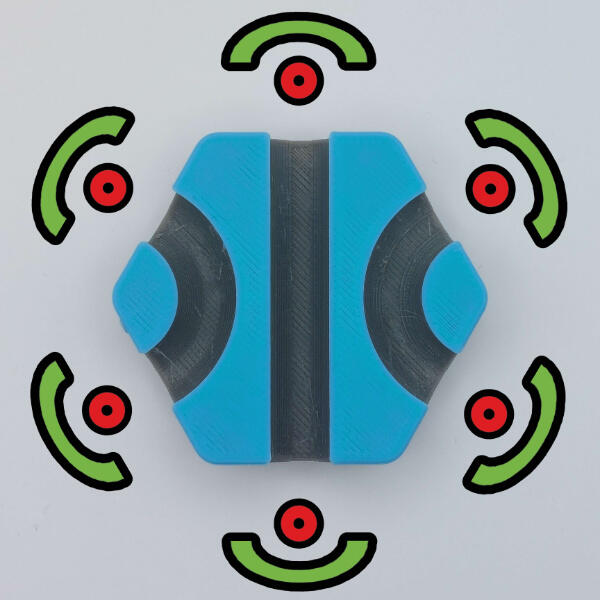
DIC
A simple tile with two tight turns and a straightaway down the center.Orientations: Any
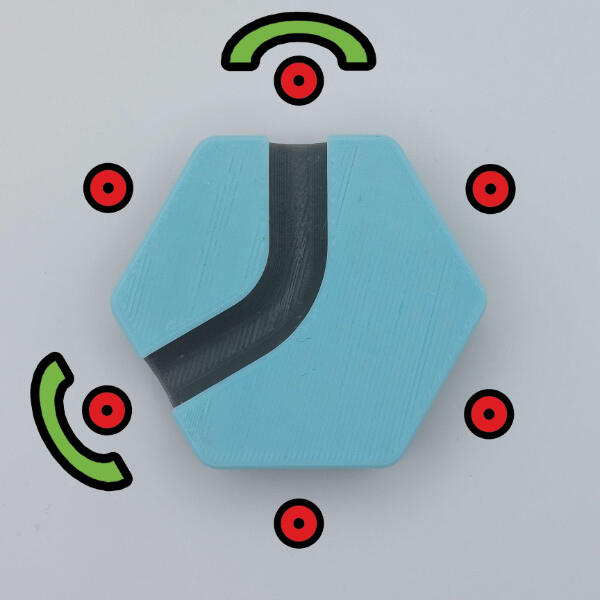
J
The most basic of basic tiles, with a single gentle turn.Orientations: Any
Newton's Cradle
An unusual kind of trap tile. With the right momentum, a ball stuck in one side will be knocked free by a ball on the other side. Can also be played upside-down, foregoing this effect.Orientations: 0, 3
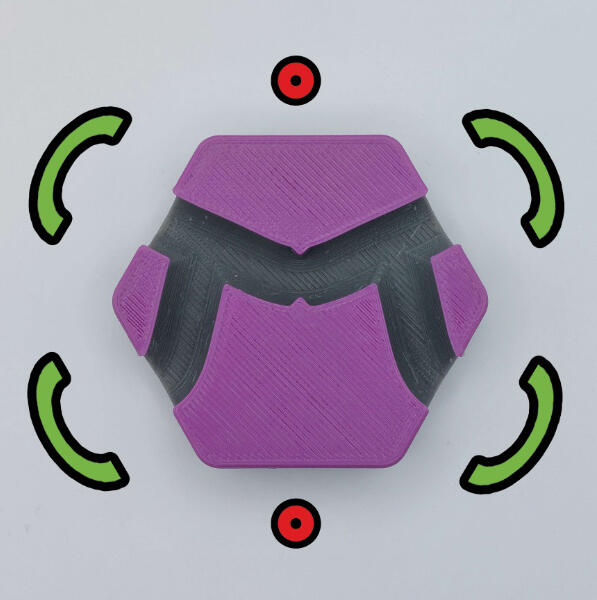
Peace
A straightaway with branching lanes, and/or a forked path that can converge into one.Orientations: Any
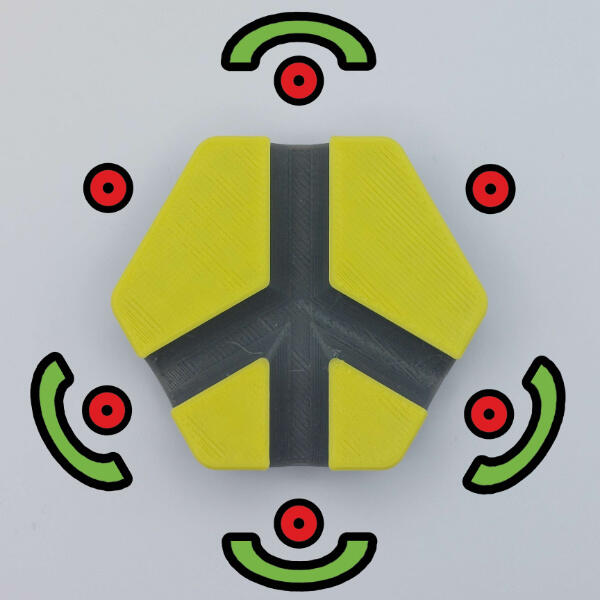
S
A basic tile on the sillier side. At low speeds, a horizontal S tile can reverse a ball's direction. May also act as a straightaway or gentle turn. Mirror of the Z Tile.Orientations: Any
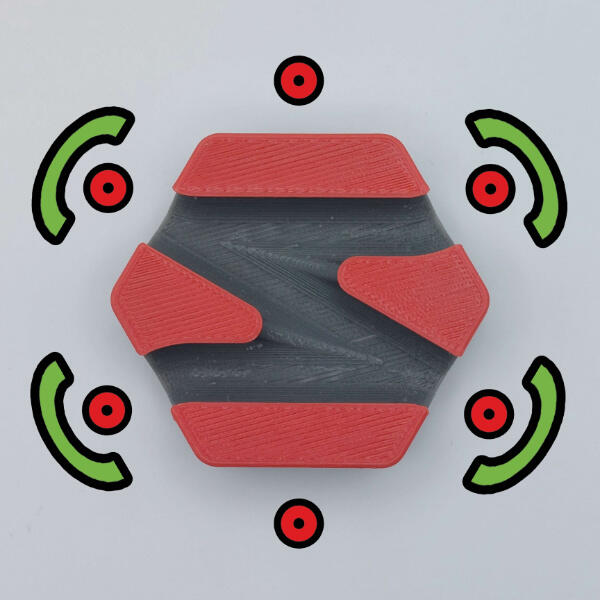
Spiral
A quagmire of a tile. Balls will get stuck without enough momentum. Choose your orientation carefully!Orientations: Any
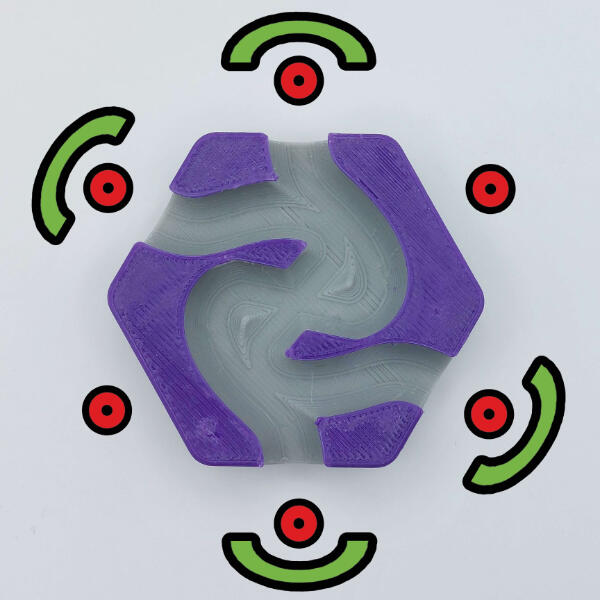
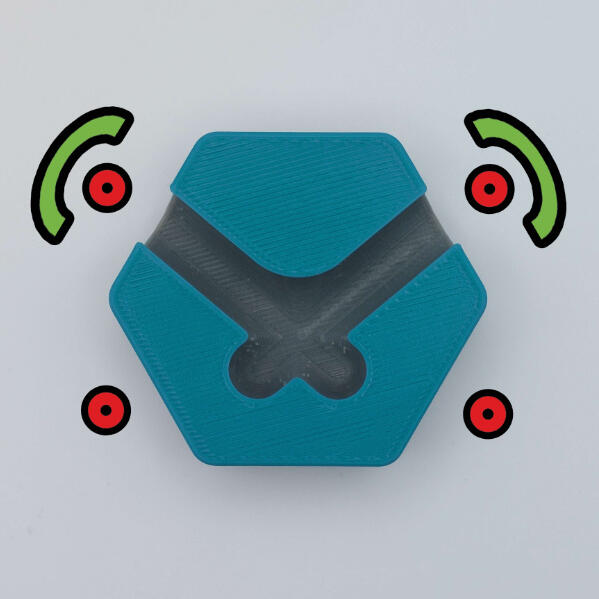
Trap (Double)
J Tile with a grudge. The first ball to enter this tile will get stuck. (Note: in positions 1C and 1CC, a second ball may also get stuck!)Orientations: 1C, 1CC, 2C, 2CC
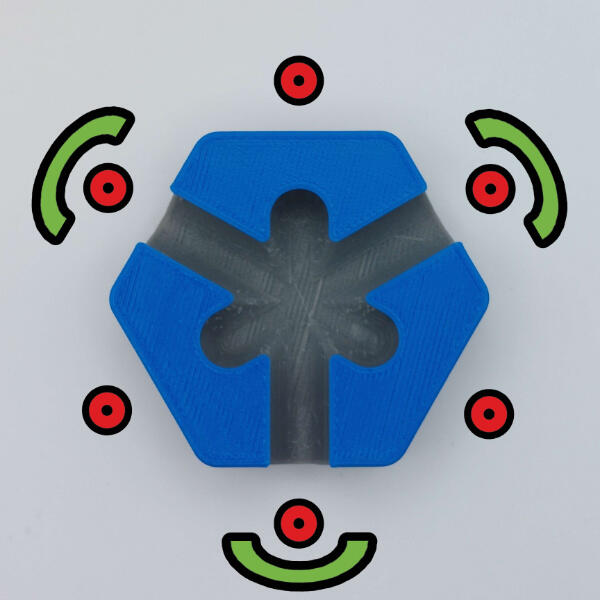
Trap (Triple)
This tile is a vindictive soul. With the entry channel pointing up, it traps one ball, then acts as a left/right randomizer for future balls. When in Funnel Formation™, it may even trap a second ball.Orientations: Any
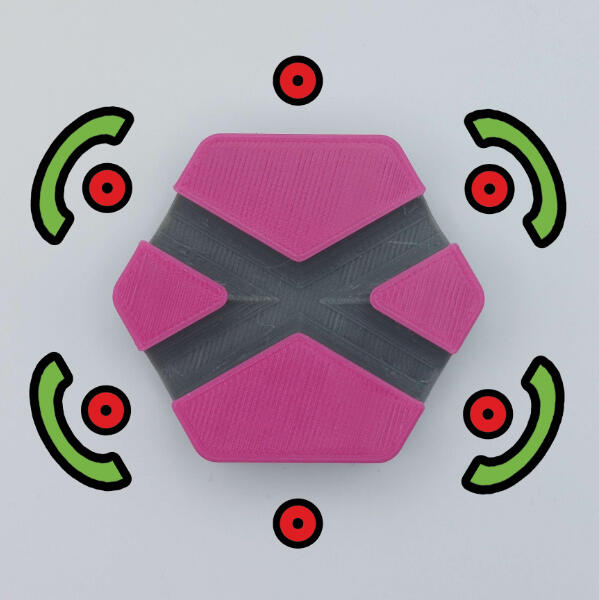
X
A simple intersection which can allow paths to criss-cross.Orientations: Any
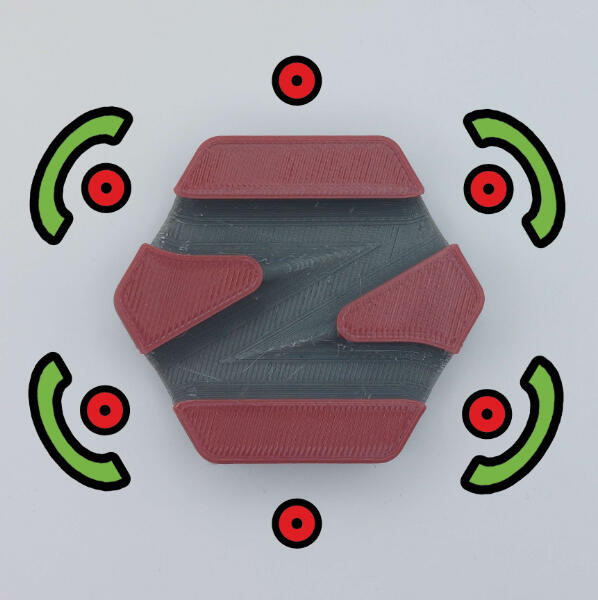
Z
A basic tile on the zanier side. At low speeds, a horizontal Z tile can reverse a ball's direction. May also act as a straightaway or gentle turn. Mirror of the S Tile.Orientations: Any
SPECIAL TILES
Bomb
A dead-end tile. Once it has collected three balls, it explodes, destroying itself and all surrounding tiles! But be careful... some balls may jump right out of the tile instead of collecting at the bottom!Orientations: 0, 1C, 1CC
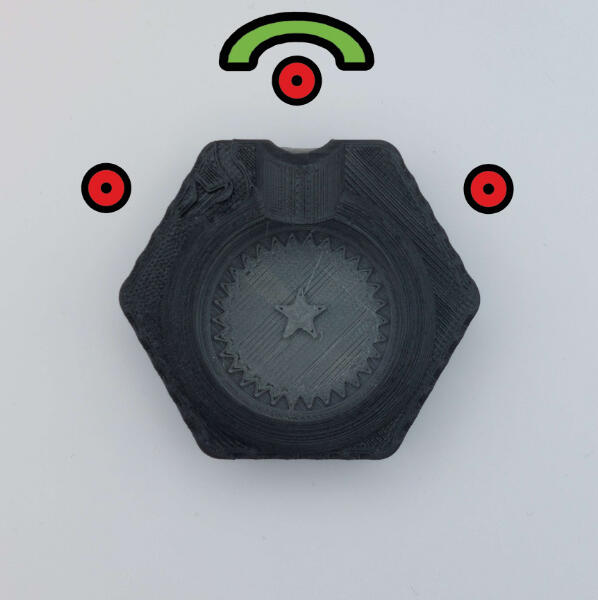
RULE CARD:
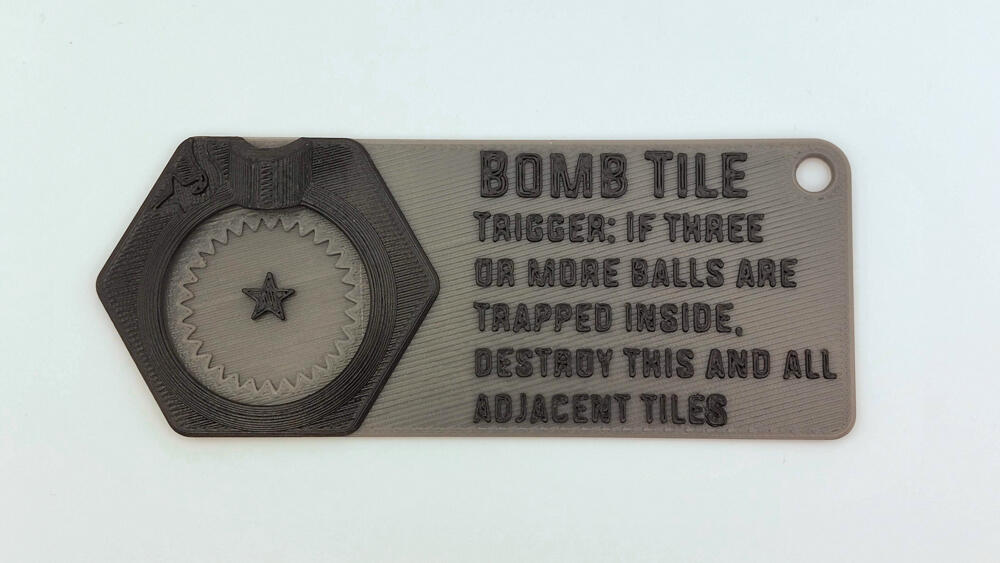
Boomerang
When you play this wily-but-limited J piece, you can steal any (non-boomerang) tile right off the play field! Snag a strong tile for yourself, or force an opponent to replace a tile of theirs with a junky one. (Note: effect takes place after placing, so this tile cannot, essentially, overwrite another.)Orientations: 1C, 1CC, 2C, 2CC

RULE CARD:

Clone
A speed-bump tile with a catch: every ball that passes through is cloned! Duplicated balls are rolled from this tile's ramp.Orientations: 0
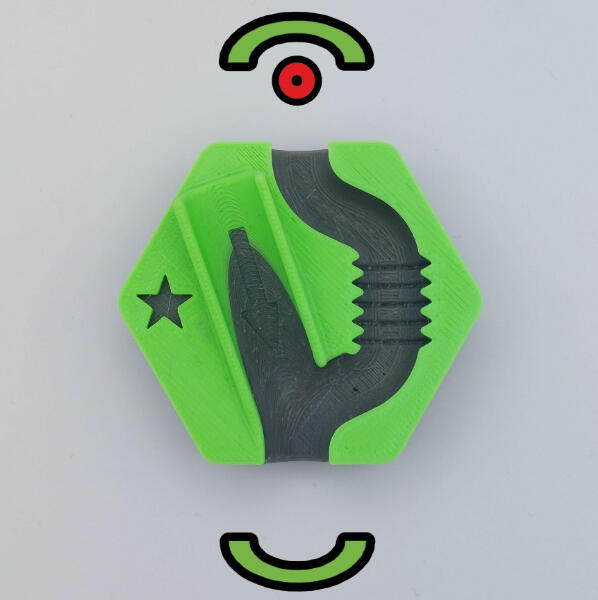
RULE CARD:
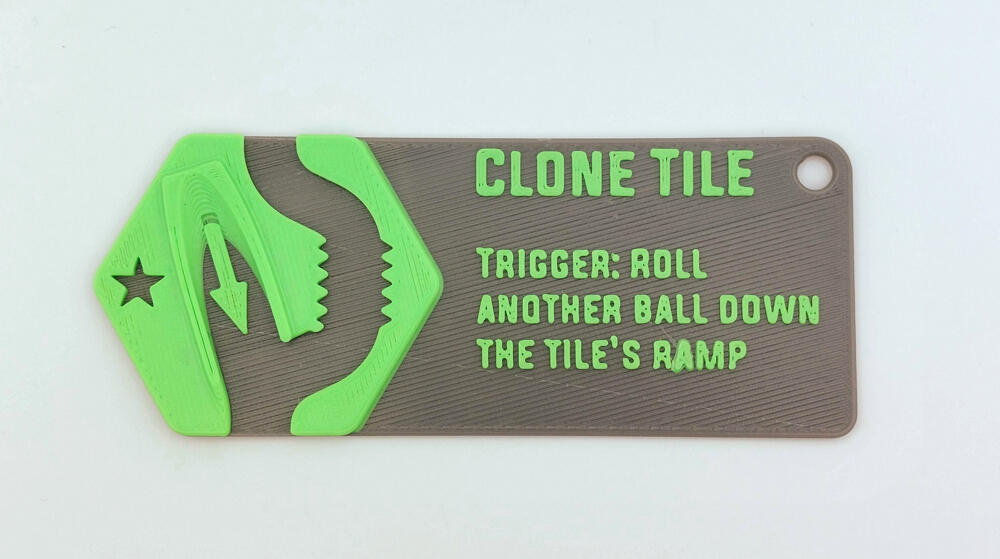
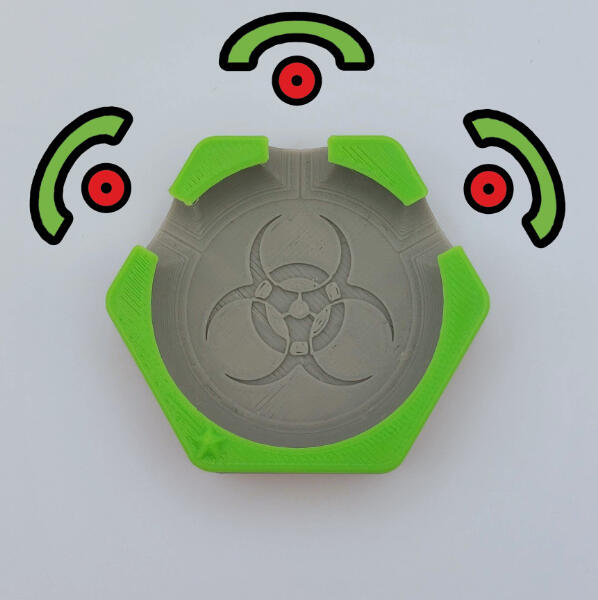
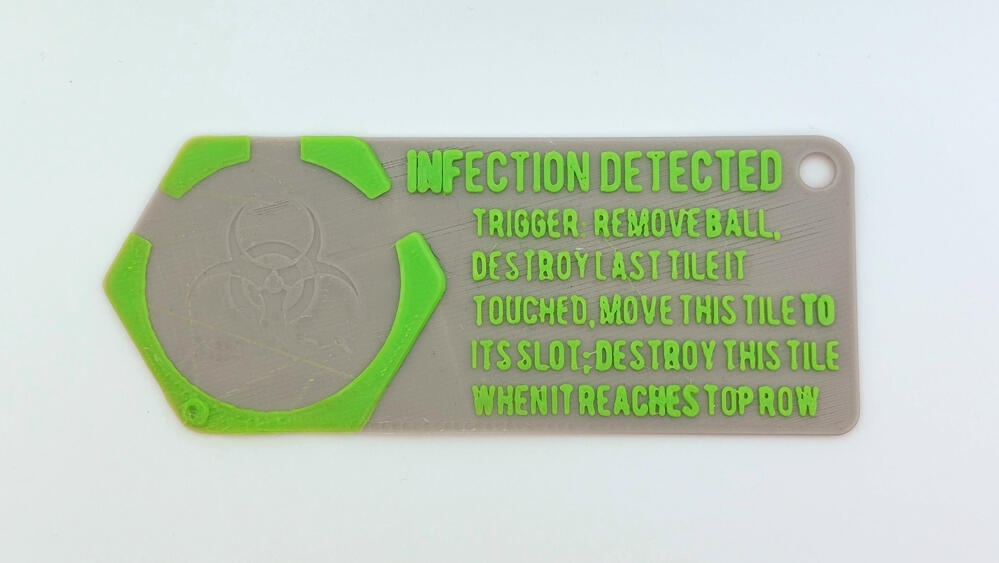
Contagion
When a ball enters this destructive tile, the ball is removed, the last tile the ball touched is destroyed, and this tile takes its place. A great late-game board-sweeper! (Tile is destroyed when on the top row.)Orientations: 0, 1C, 1CC
RULE CARD:
DC Flipper
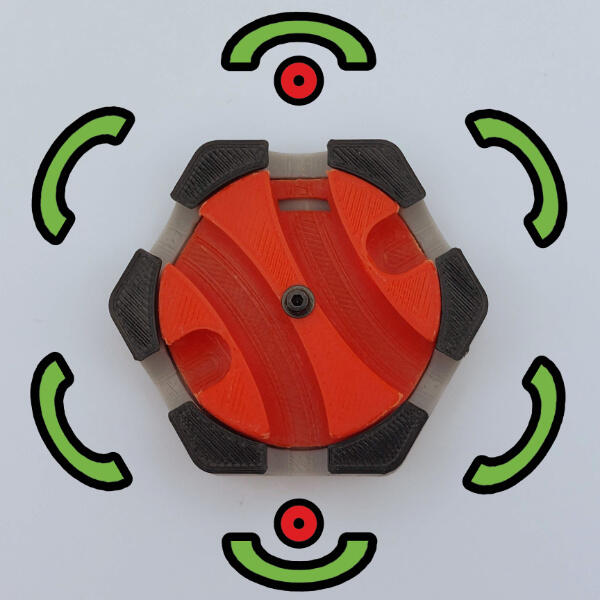
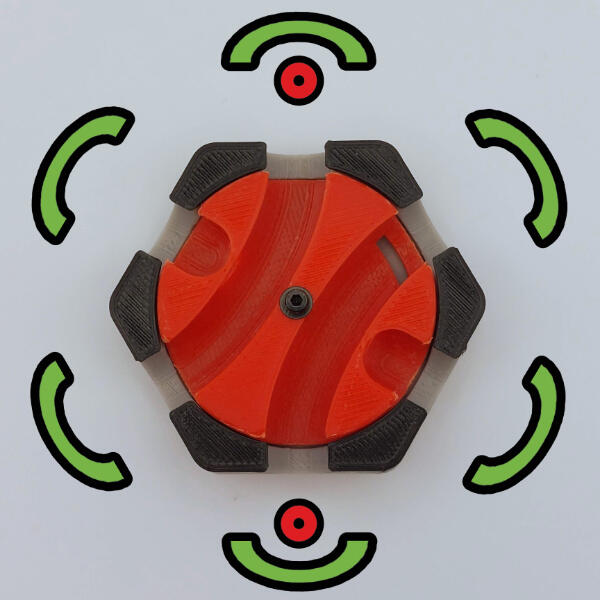
A toggle tile whose direction must be changed using either side entrance (this ball will then exit at the face directly below it, like a Mini DC). Otherwise, it behaves like a J tile. Note: unreliable.
The player may choose whether the flipper initially points [left] or [right].Orientations: 0, 3
[left] orientation
[right] orientation
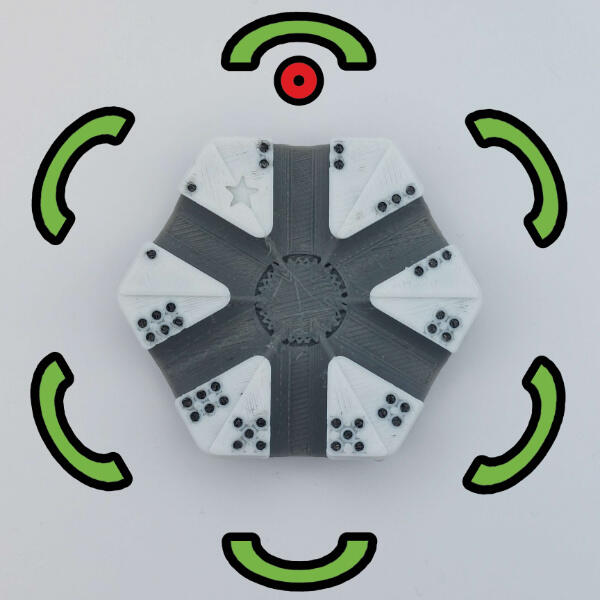
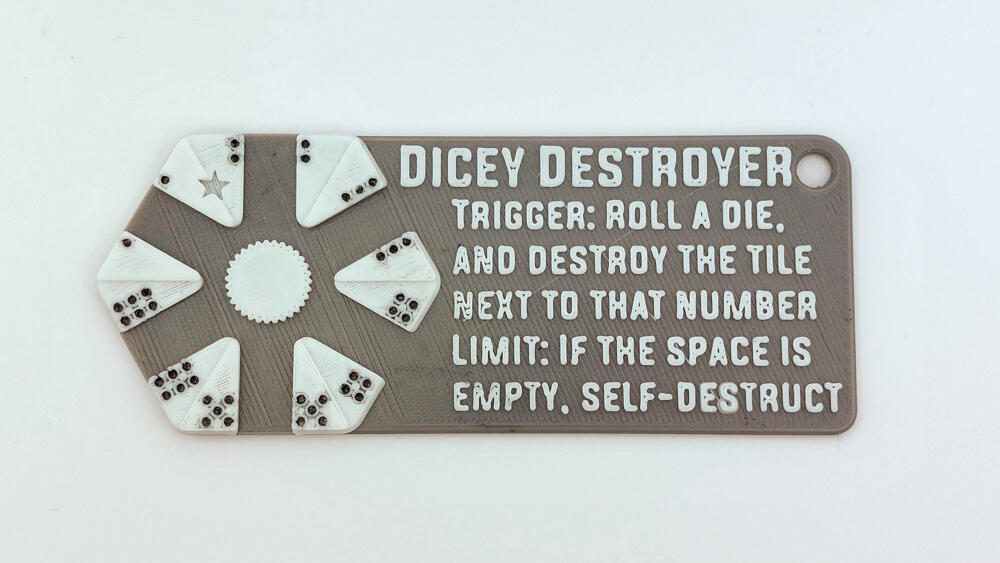
Dicey Destroyer
A rather violent Asterisk tile. Every time a ball passes through it, a die is rolled, and the tile touching the corresponding edge is destroyed. (If there is no tile there, it destroys itself instead!)Orientations: 0
RULE CARD:
Dispenser
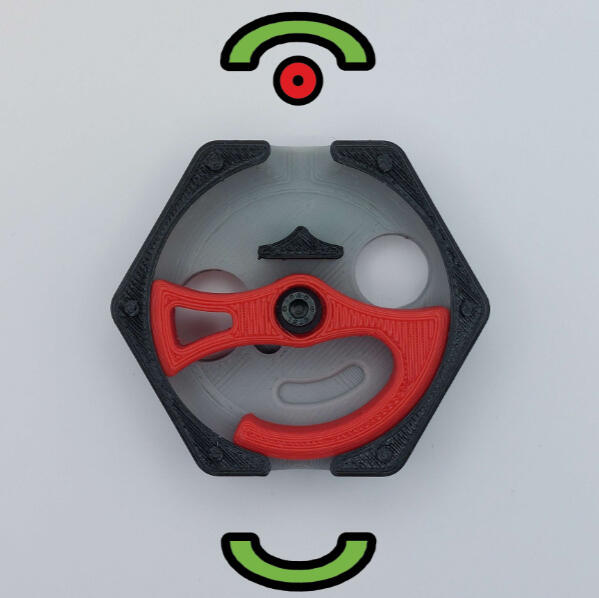
Go double-or-nothing with this spicy spinner. On play (and any time it empties), two balls are loaded into this tile's scoop. Players who enter the tile have a 50/50 chance to dispense a bonus ball, or lose their only ball into the void.Orientations: 0
Flipper (Advanced)
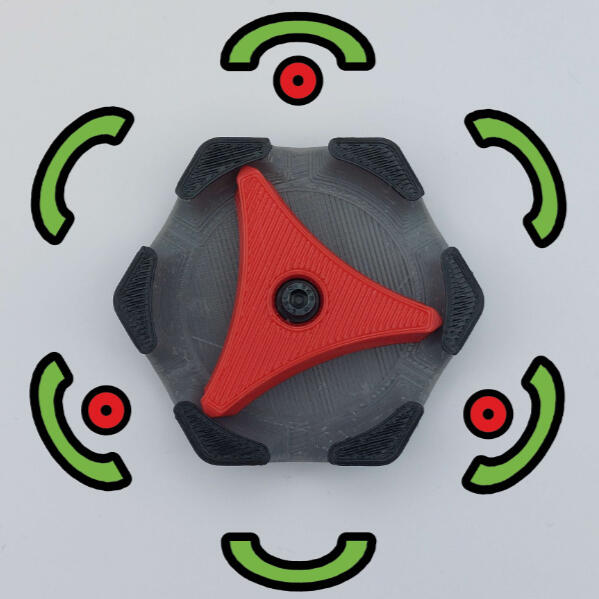
A simple toggle tile similar to its Basic sibling (see below). This variation allows balls to enter side-channels, working like a Mini DC Tile... and will force the flipper to tilt to that side. How strategic.
The player may choose whether the flipper initially points [left] or [right].Orientations: 0, 2C, 2CC
[left] orientation
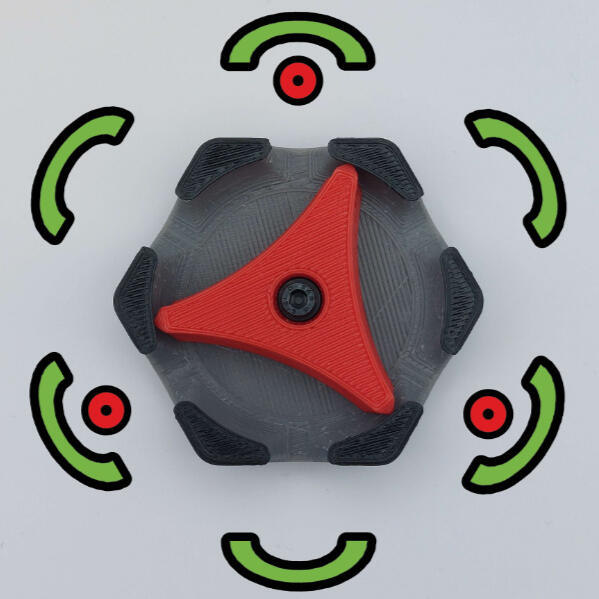
[right] orientation
Flipper (Basic)
A simple toggle tile; the first ball is routed to one side, and the next is routed to the other.
The player may choose whether the flipper initially points [left] or [right].Orientations: 0, 2C, 2CC
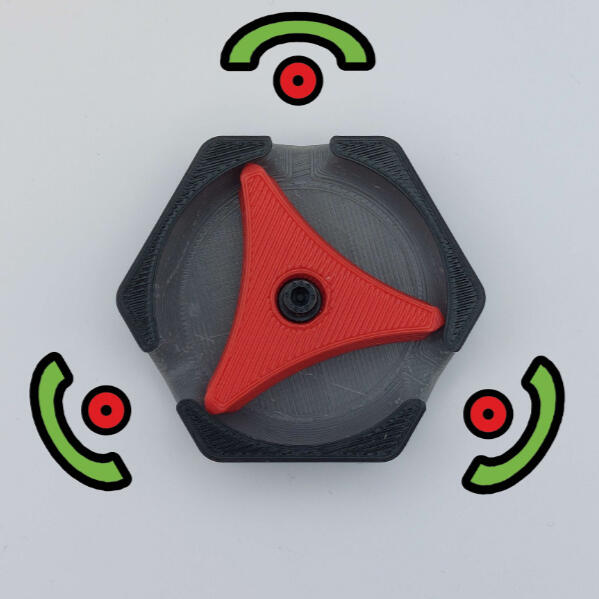
[left] orientation
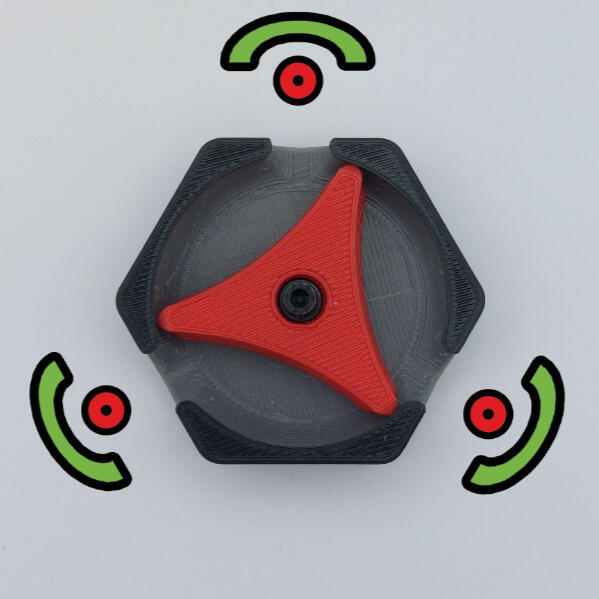
[right] orientation
Gauss Cannon
This accelerator tile is loaded with two steel balls attached to a central magnet. When a ball enters the empty side of the tunnel, Gauss's Law causes the ball on the other side to launch at high velocity!Orientations: Any
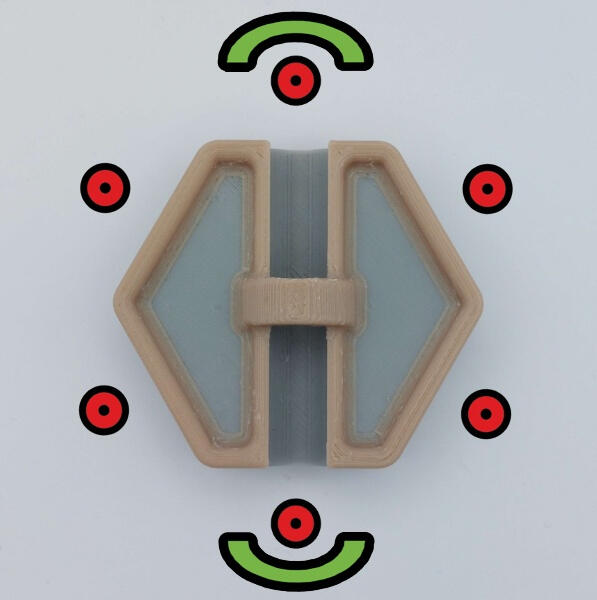
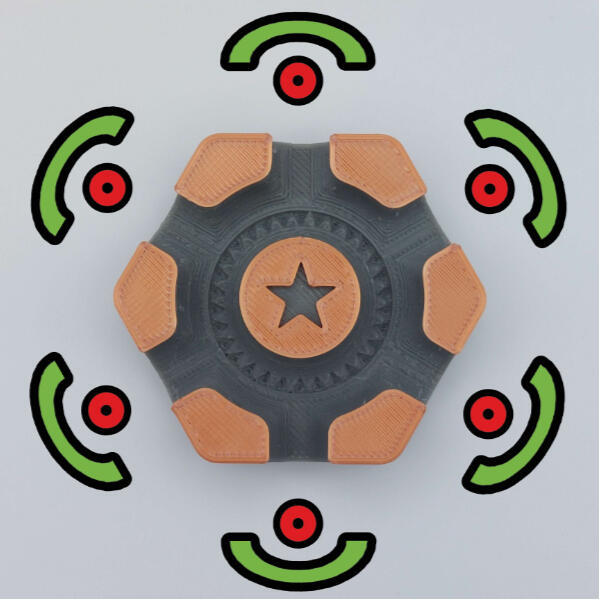
Gear
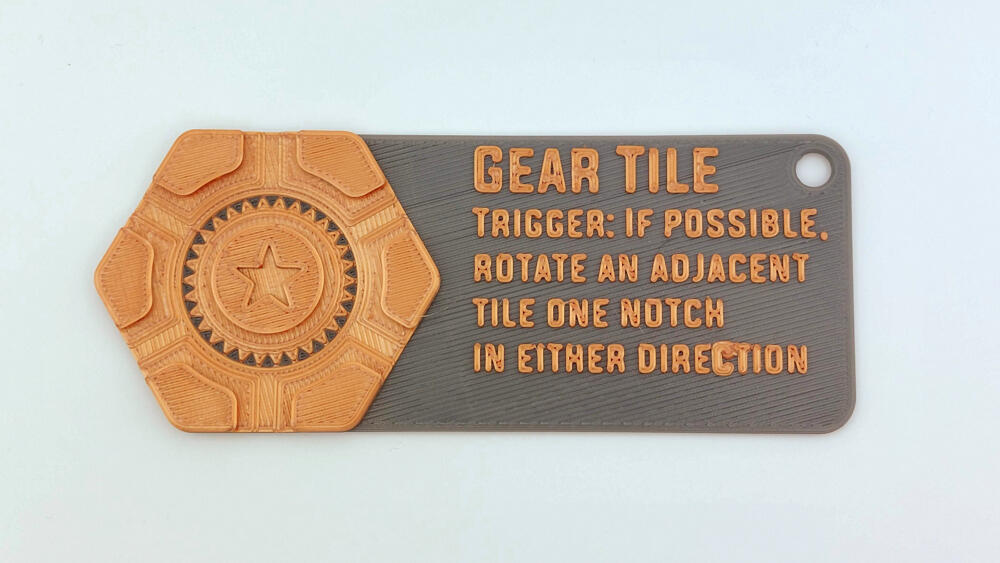
An Asterisk Tile with a twist: when triggered, the active player may choose to rotate any adjacent tile one notch in either direction. (A "notch" is defined as the next valid orientation when rotating in either direction.)Orientations: Any
RULE CARD:
Hammer
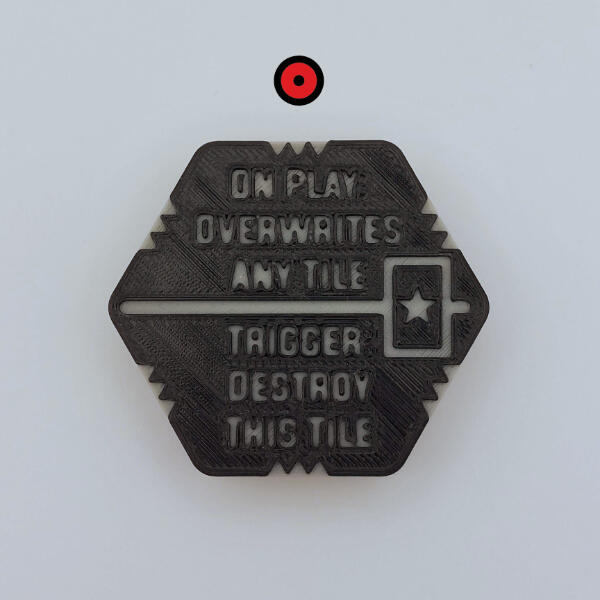
The Hammer has one job and one job only: to destroy. Play this tile in any space already occupied by a tile to completely remove that tile from the board. Once a ball comes to rest against this tile, it destroys itself.Orientations: 0
Infection Detected
See "Contagion."
Jerk
This tile has a unique layout, and an even uniquer rule: on play, the player may swap this tile's position with the position of a tile immediately adjacent to this one. (Apologizing is equally and separately optional.)Orientations: Any

Jump (Single)
This chaotic tile allows balls to leave the grid and take flight. With enough momentum, you might sail straight into an end zone!Orientations: 0, 1C, 1CC
Jump (Triple)
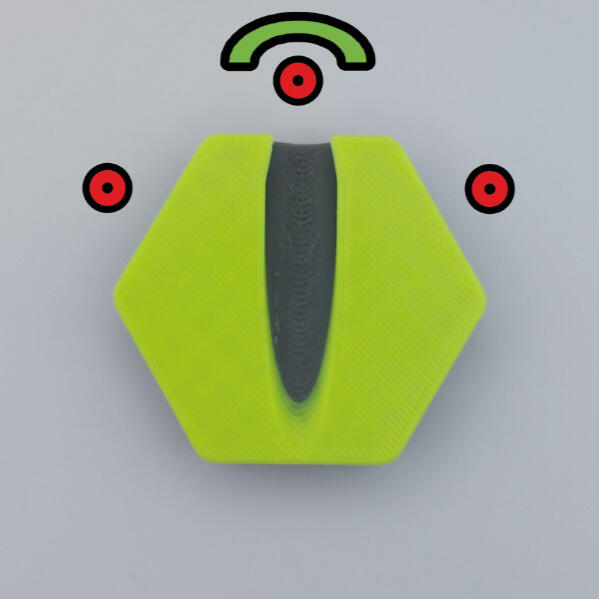
Thrice as nice! The Triple Jump allows balls to enter from any of its three lanes, and sends them in different trajectories depending on their entry point.Orientations: 0
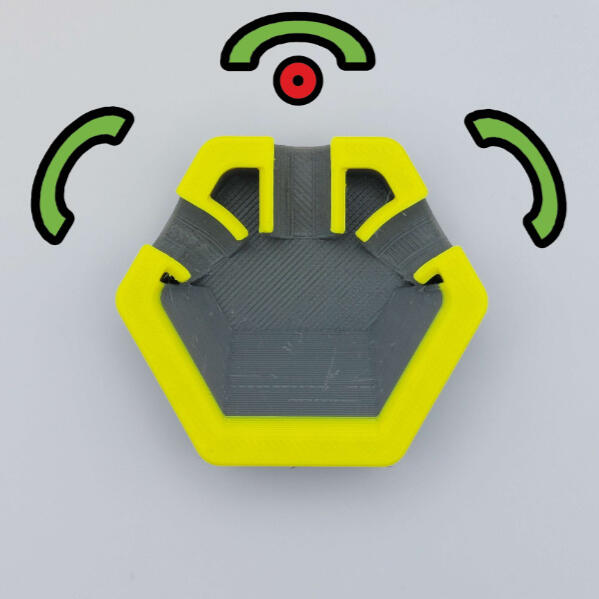
King
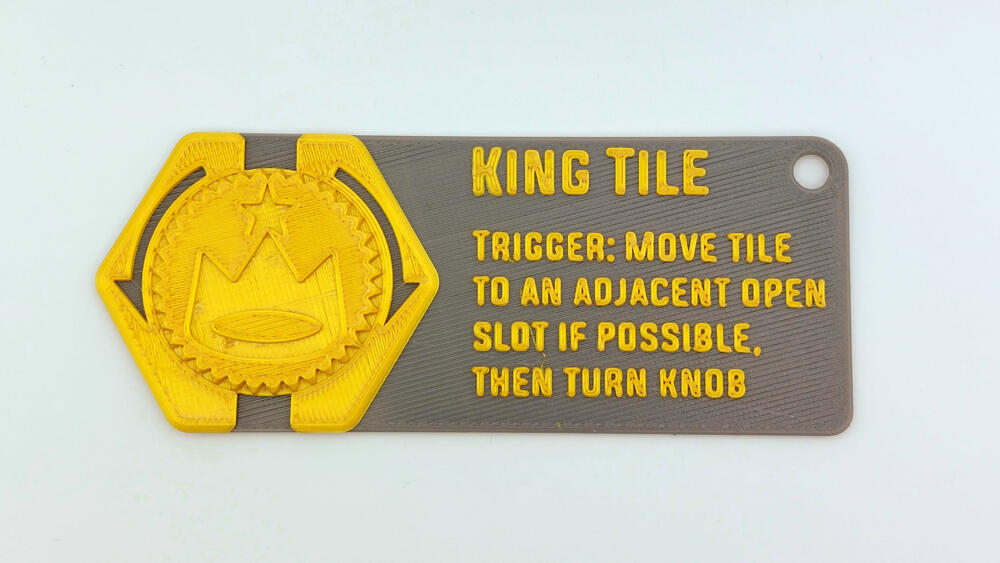
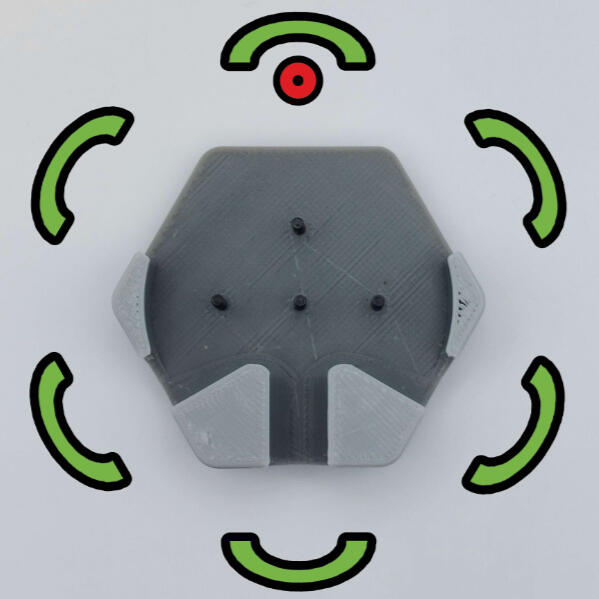
Hope you know chess! When a ball lands in the King Tile, the player may move the tile to any adjacent vacant space, then twist the knob to let the ball pass through.Orientations: 0, 3
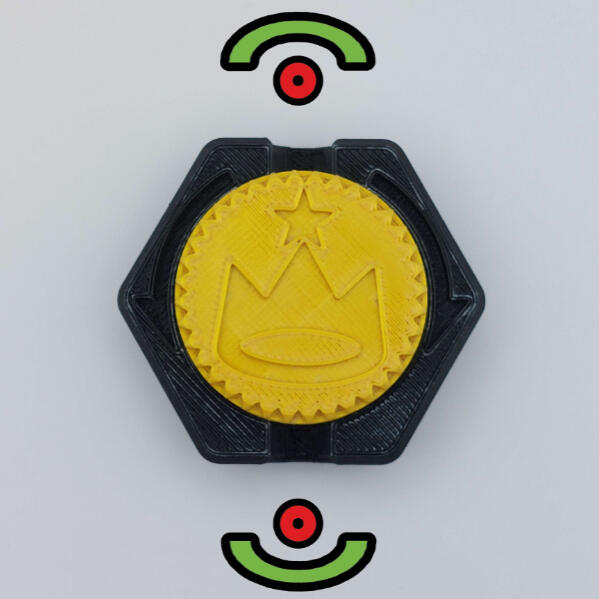
RULE CARD:
Pachinko
The OG randomizer; balls enter anywhere and exit via any ramp.Orientations: 0
Rail
One-way only! The Rail Tile provides a straight lane in one direction, but balls that approach the tile at other angles fall through the board.Orientations: Any
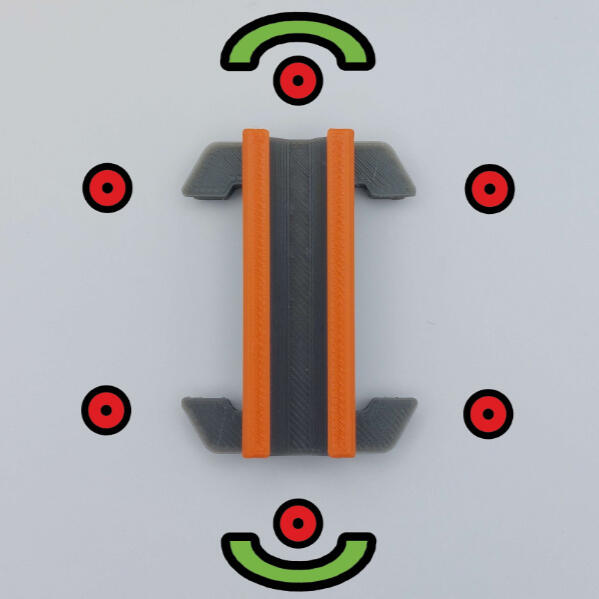
Railroad Switch
Similar to the Flipper, but balls always pass through the bottom – and using a side-entrance will block that entrance until another is used.
The player may choose whether the switch initially points [left] or [right].Orientations: 0
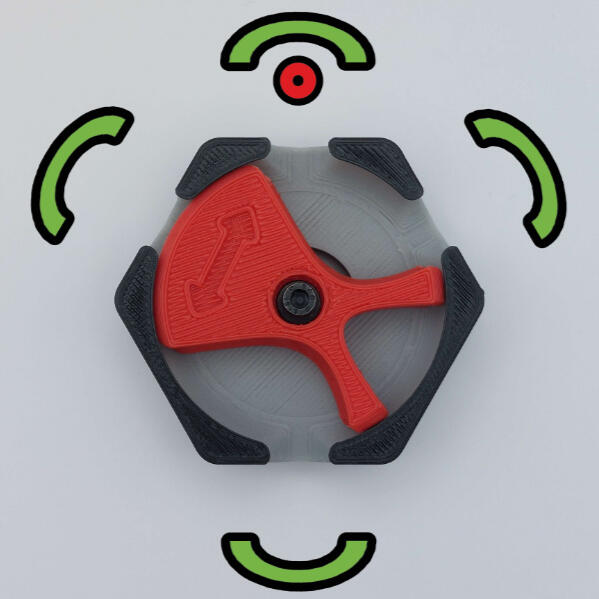
[left] orientation
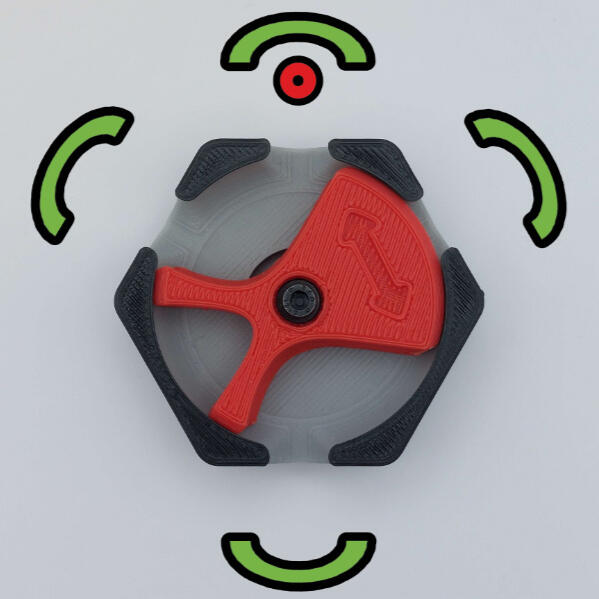
[right] orientation
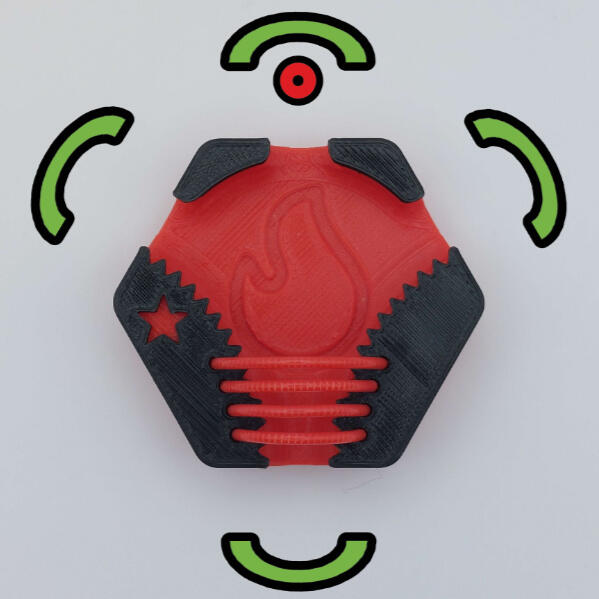
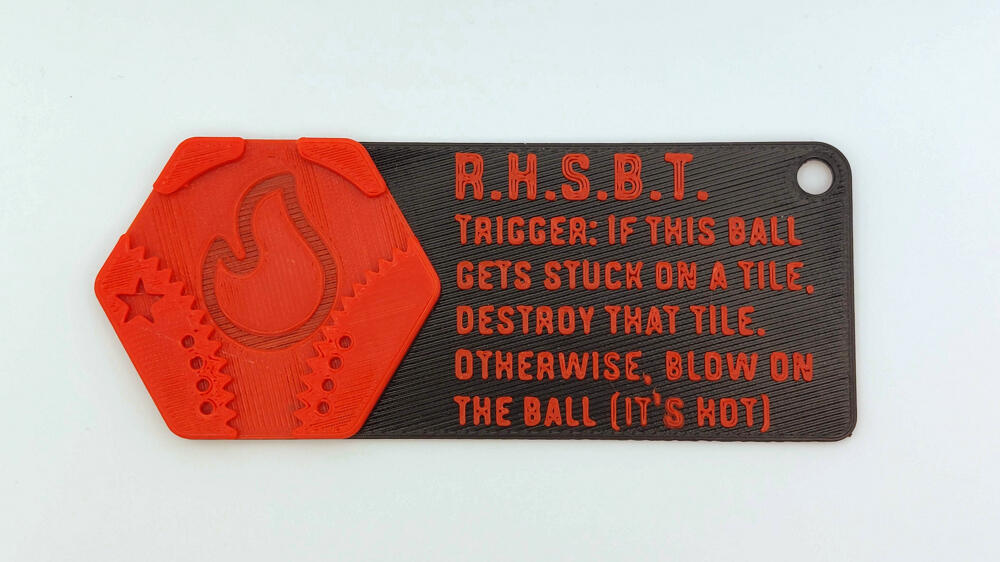
Red Hot
Steel Ball
If a ball that has passed through this tile's heating coil gets trapped, any tiles the ball is touching are immediately destroyed. (This can include the R.H.S.B.T. itself!)Orientations: 0
RULE CARD:
Secret
These tiles come in four flavors: DC, Mini DC, X, and Flipper. They are covered with a Magical Mystery Lid™, and therefore the flavor (and orientation, once played) is a mystery to all except the tile holder.Orientations: Any
DC
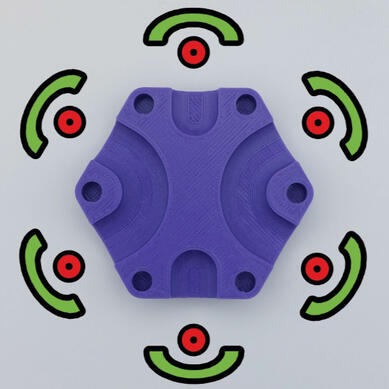
Mini DC
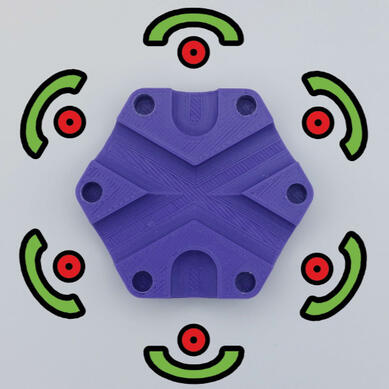
X
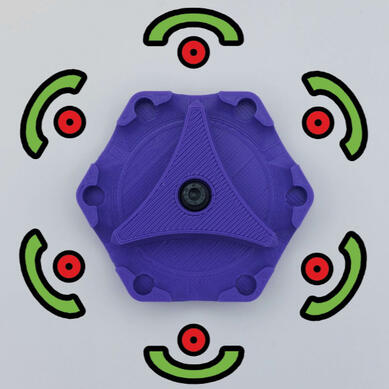
Flipper
Seek
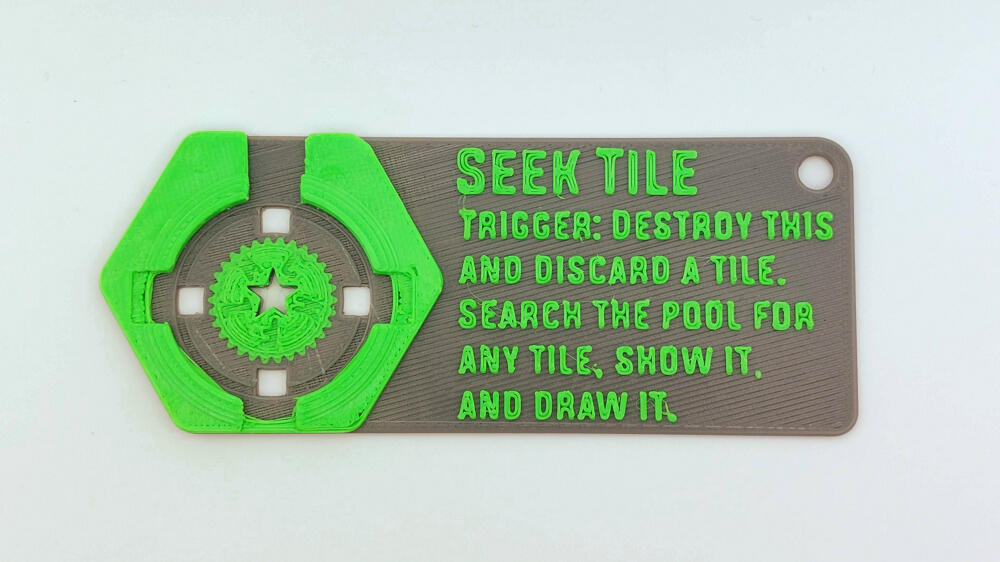
A dead-end tile. When a steel ball runs into this tile, harness the power of the spin to destroy this tile and discard a tile from your hand, then pick a new tile from your pool, show to all players, and add to your hand.Orientations: 0, 1C, 1CC
RULE CARD:
Single-Use
A straightaway that shuts the door behind it, allowing only one ball to pass through. The rest get trapped, and remember what they say in baseball – three balls and you're out. (Wait...)Orientations: 0, 1C, 2C
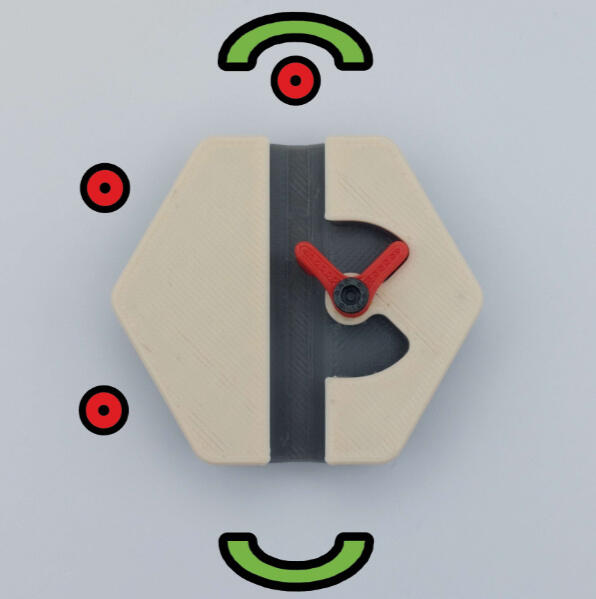
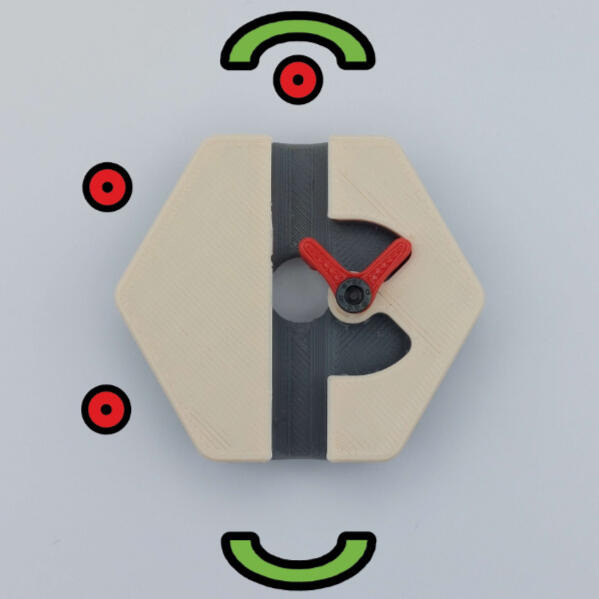
Single-Use (Void)
Identical to the Single-Use Tile (see above), except any ball that follows the first will fall into a void instead. (Careful – first-balls that are too slow might also get swallowed!)NOTE: This void is treated with Void Tile rules (falling through is treated the same as if the ball had fallen off the side of the board, removing the tile from the play field. However, the player MAY place this tile after taking a turn.)Orientations: 0, 1C, 2C
Sozu (Left/Right)
This tile behaves like a traditional sozu ornament; it must receive two balls before it rotates and dumps them out below it. Note: unreliable.(Pay attention to the variant you draw, L or R; they only work in one orientation!)Orientations: 0
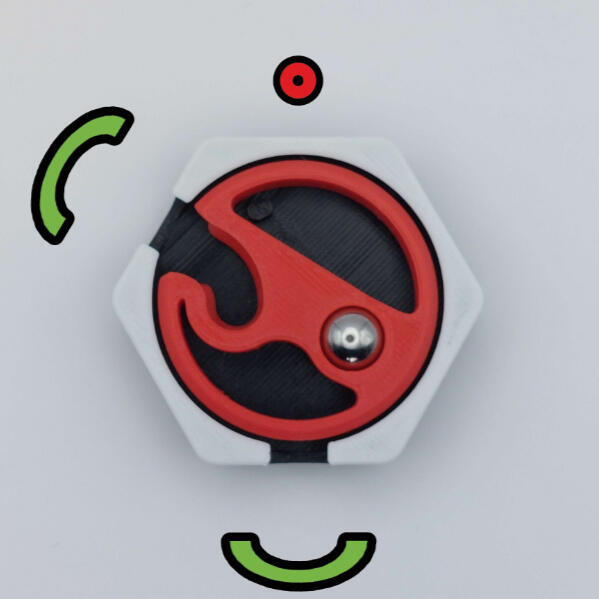
Left (L)
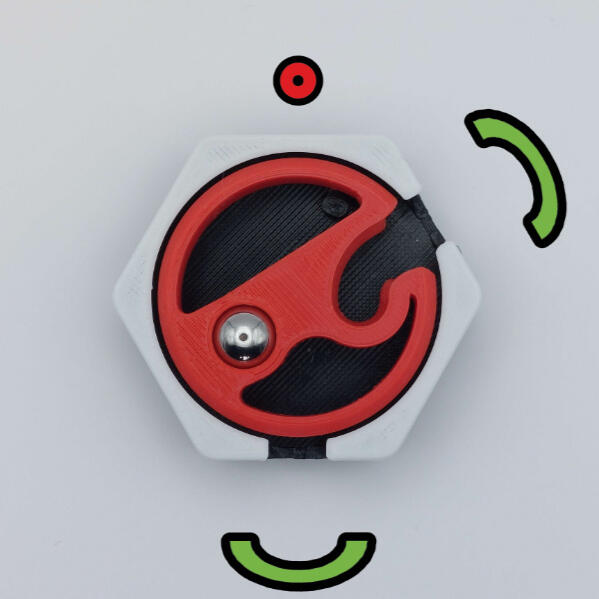
Right (R)
Teleport
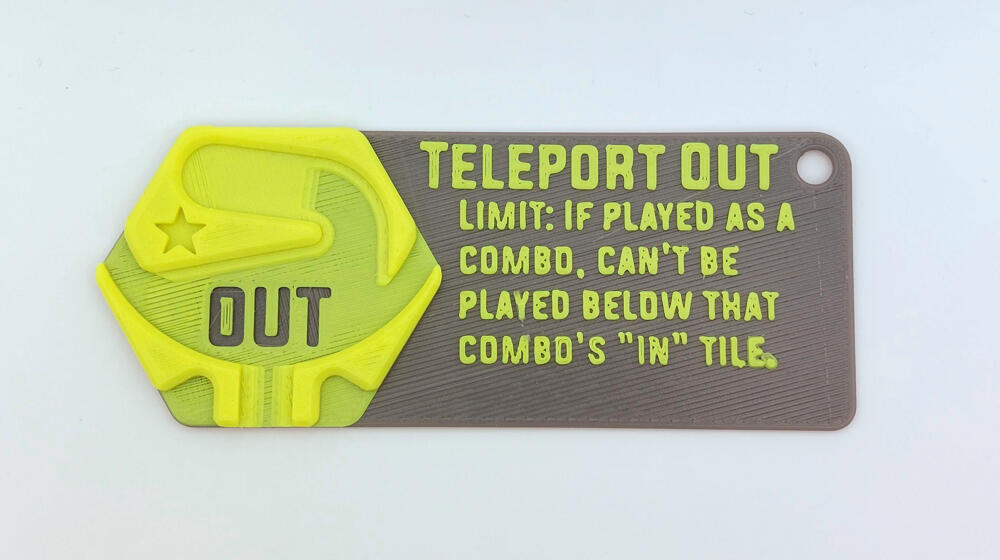
Always played as a two-part set, this tile transports any balls that land in the "In" tile to the "Out" tile's ramp.
(Note: the "Out" tile must be played on a higher row than the "In" tile. Additionally, if one Teleport tile is removed, the other tile is removed as well.)Orientations: 0
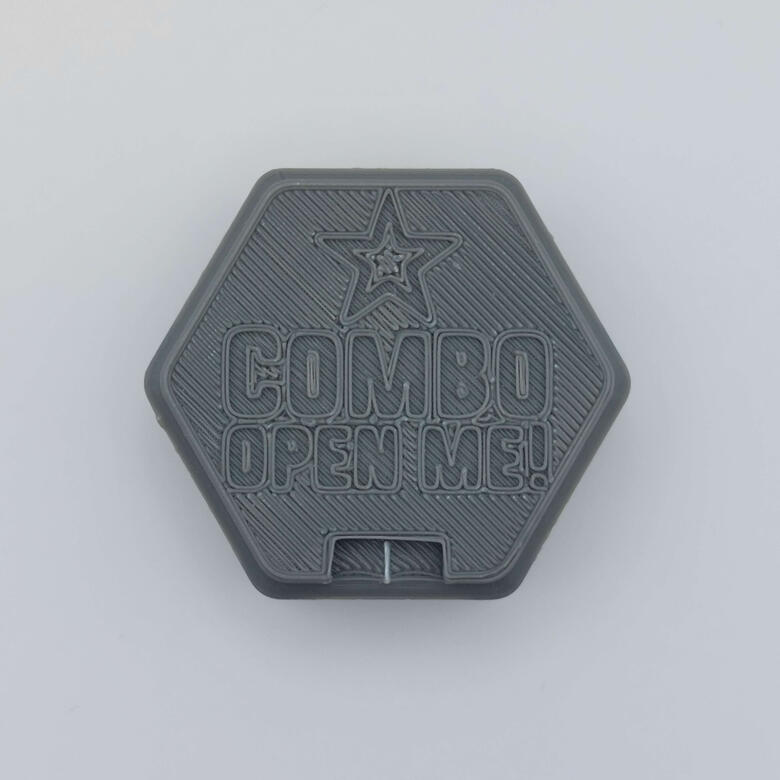
Teleport Tile (Combo)
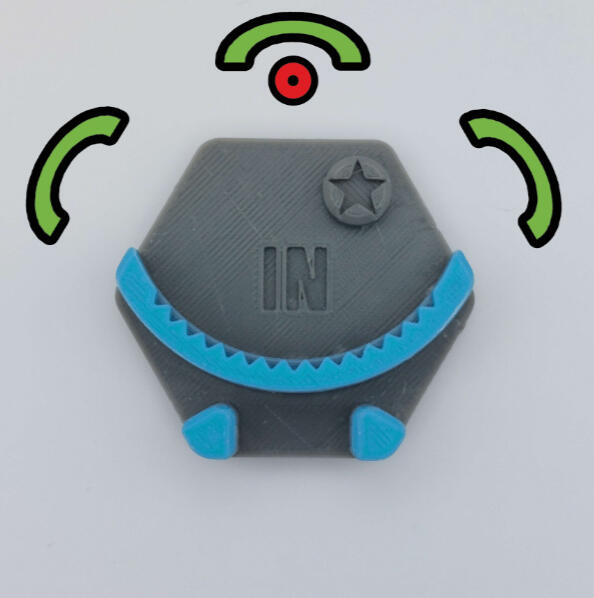
"In" Tile
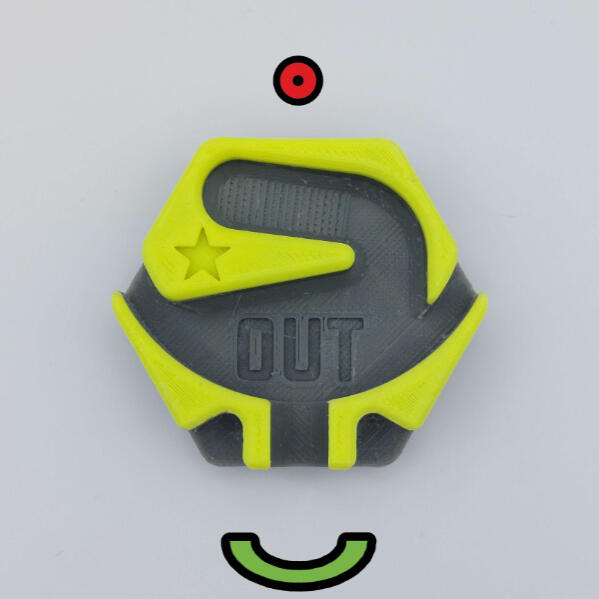
"Out" Tile
RULE CARDS:
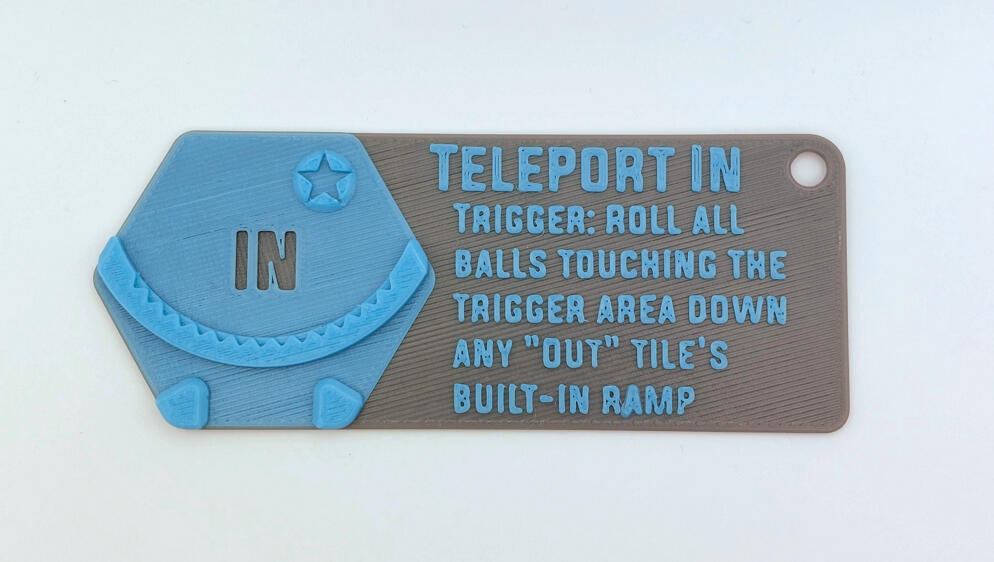
Tidal Wave
This peace tile really make a big splash – on play, the player may choose any direction originating from this tile. All tiles along this line will the get "pushed" one space away from this tile! If a tile falls off the board as a result, that tile is destroyed.Orientations: Any

RULE CARD:

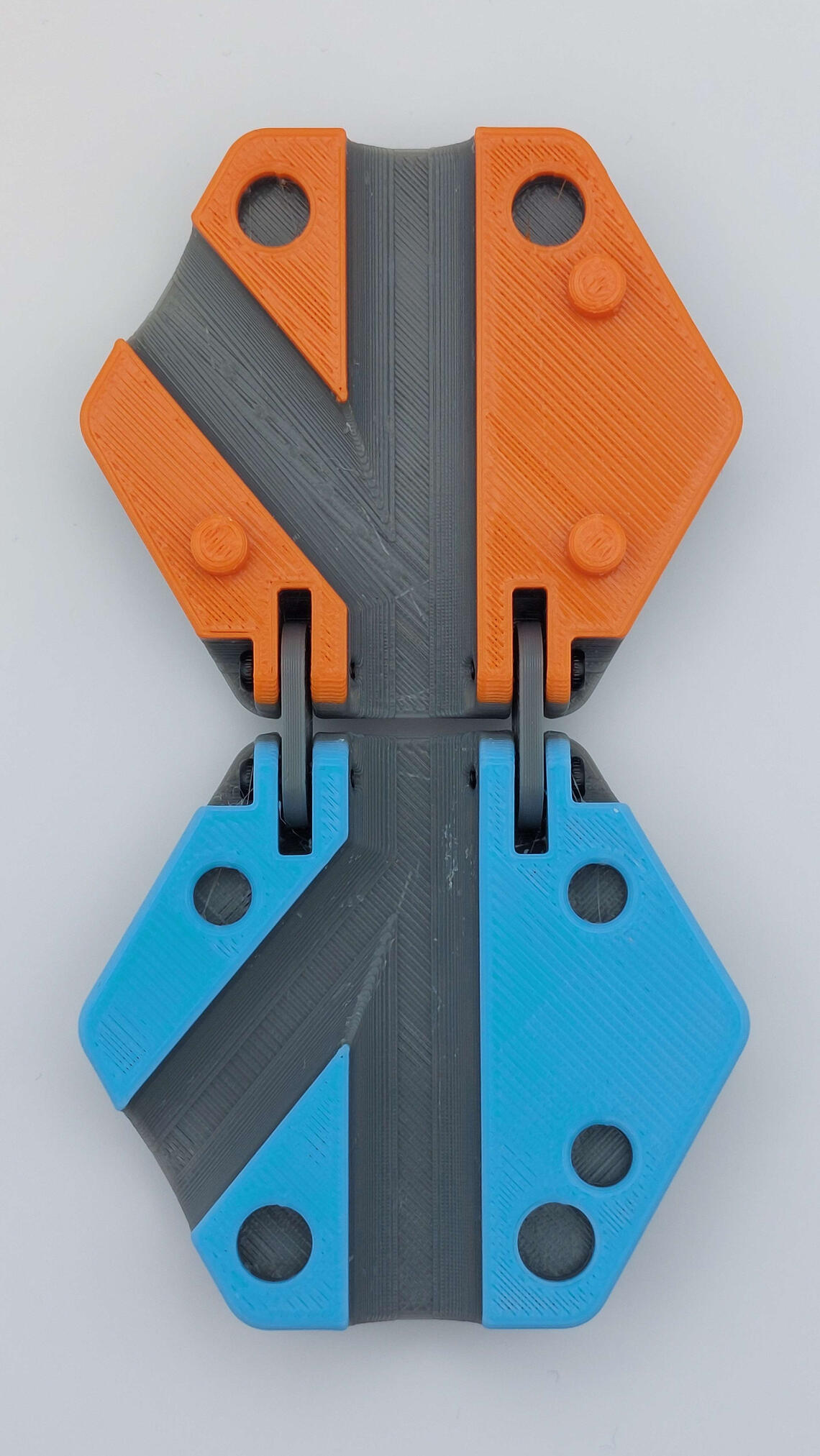
Tile Built For Two
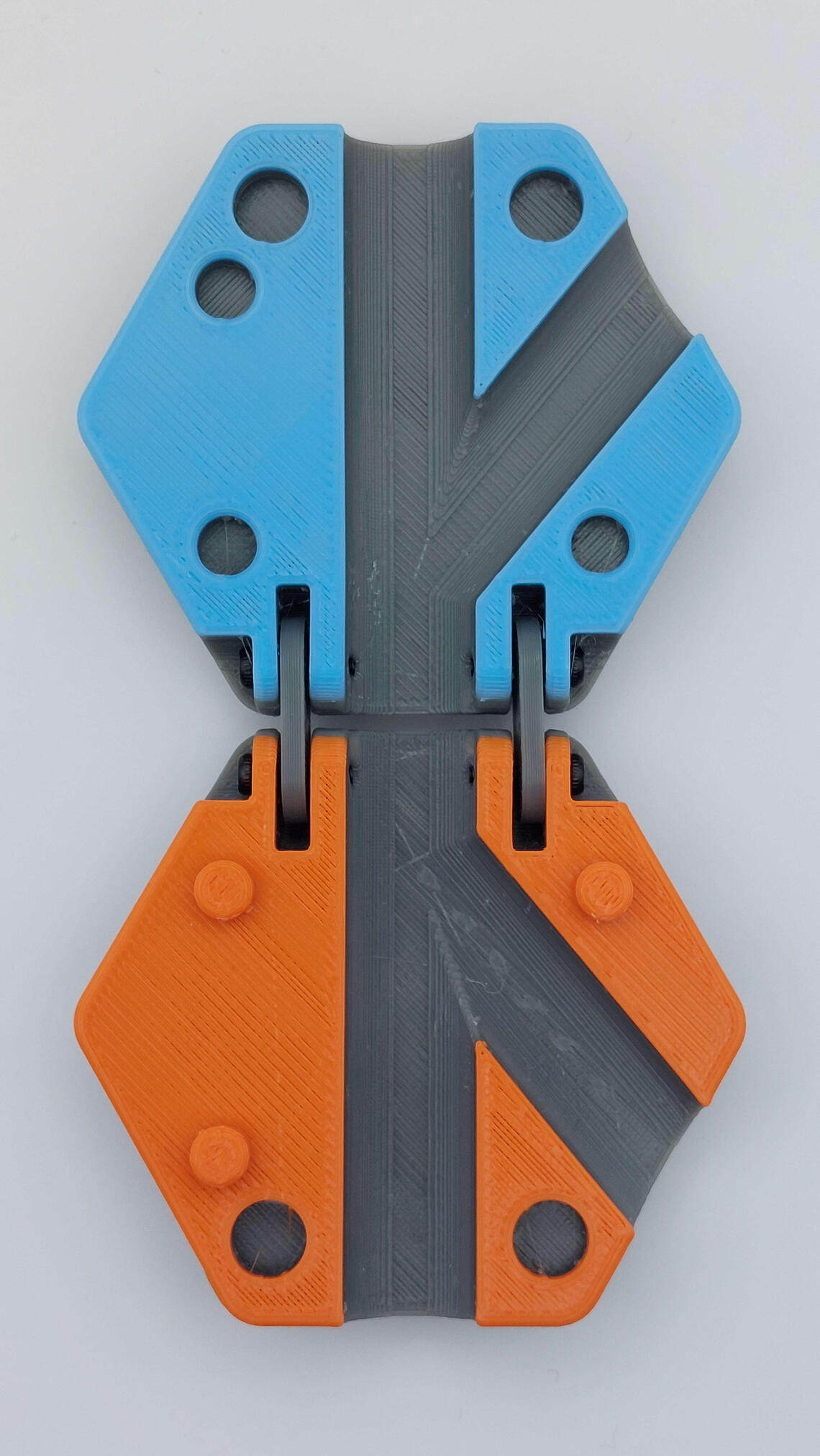
A strange tile which, on play, the player can choose to open into two halves. Also functions perfectly well while closed."Open Me" Orien.s: 0, 1CC, 2CC, 3
"Or Not" Orien.s: 0, 1C, 2C, 3(For both orientation options, "right-way-up" is hinge-side-down.)
Open Me side
Open Me side (open)
Or Not side
Or Not side (Open)
Tile With Nothing
J Tile with a special property: on play, the player may choose to discard their hand and draw three entirely new tiles.Orientations: Any
Void
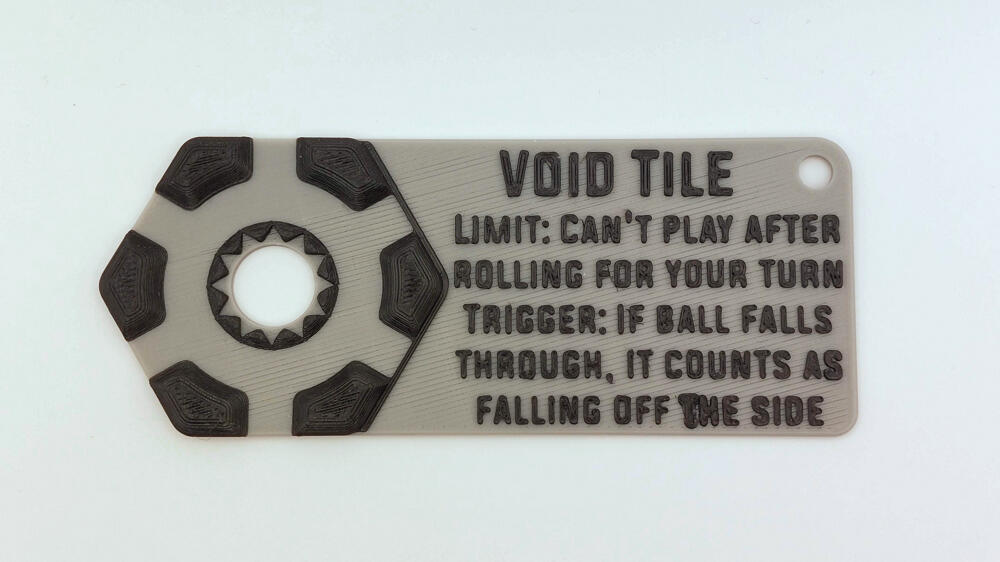
Asterisk tile with a void in the center. When a ball falls into the void, the tile is removed from the play field.NOTE: this tile may only be played BEFORE the player rolls that turn!Orientations: Any
RULE CARD:
Vortex
An unnecessarily space-wasting, yet surprisingly entertaining randomizer. Balls which enter this tile's bowl will circle the drain and flush out one of its three exits.Orientations: 0
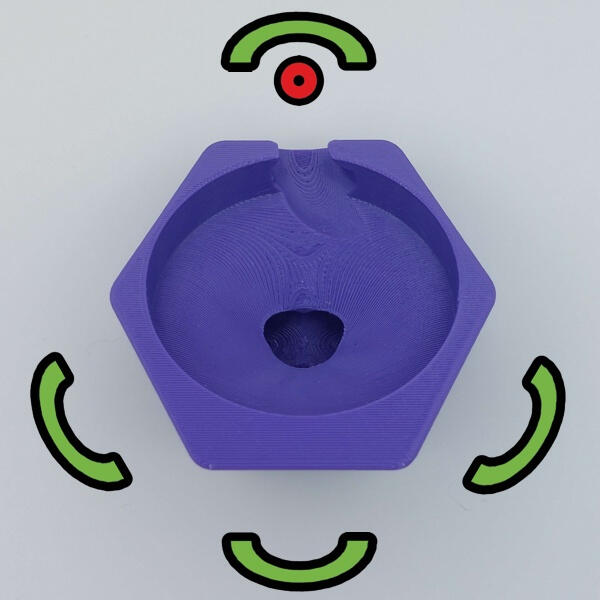
Zoidberg
A funnel-style tile with multiple trap holes, two magnets, and only one exit. If your ball manages to pass through, consider yourself lucky. Nobody knows why this tile exists.Orientations: 0